-
Liselot en Frank !
-
South-America
-
Potosí - Cerro Rico (the silver mines)
Potosí, Bolivia - Polarsteps
-We are a bit behind with this post🫣. It took some time to write this, it was hard to put our experience into words and do justice to the story-
After all the happiness, this is a more serious story. It's a part of the trip that really had an impact on us...
We arrived in Potosí for a two day stop. Potosí is a city fuelled by cerro rico silver mines, which you can see looming over the city on a clear day.
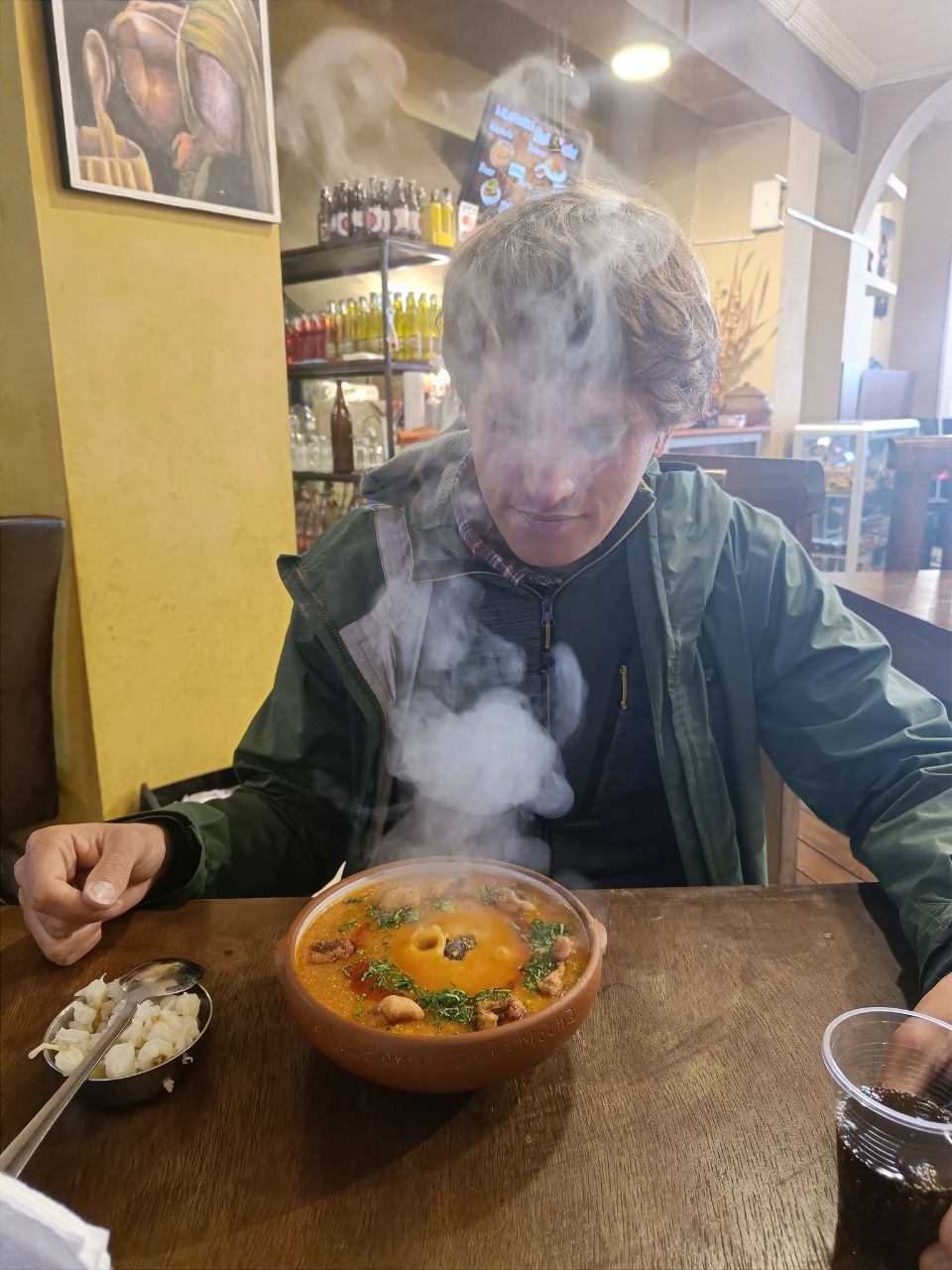
Day 1️⃣ On the first day we took some time to arrange some things, get to know Bolivians' culture (loved the sizzling hot stone soup🍲) and visited the well-done Mint museum 🏦. In this building the first truly global currency was made using the mines' silver.
Fun fact 🤑: as the currencies symbol they used the PTSI layered over each other, this is also where the dollar $ sign comes from.
Well this still sounds as a relaxed visit right? Wait till the 2️⃣nd day... We took the opportunity to visit one of the worst working environments worldwide: the mines.
We would first like to take the opportunity to share some facts about this place, afterwards we will talk about our personal experience.
FACTS
🔎Origin: The mountain was an holy mountain by the Inca's, not to be used for mining. The shiny silver was only discovered when a local started a fire and spotted some shiny melting silver. Shortly after, the Spanish empire got aware of the richness and started to mine the mountain. From that moment the mountain carried the name "Cerro Rico", meaning rich mountain.
👲Workers: After quickly running out of (voluntary) local workers, the Spanish used African slaves for exploiting the mines. However, these slaves had a hard time adapting to the high altitude and died quickly. Indigenous people from further away were used as a substitute. Because of a decreet for mandatory working, the labourers were used at almost no cost to the owners.
☠️Human toll: Even for the more altitude-adapted indigenous, it was still a hard working environment. It's believed that the mine took the lives of at least 8 million people. In the 19th century a writer wrote that "the mine swallows people alive". And still nowadays the average lifespan is estimated at a shocking 35-45 years. In earlier days the high toxic mercury was used to clean the silver ore. Nowadays, most miners die because of long cancer, not wearing sufficient protection. Other causes of death are carbon monoxide toxicity and accidents that occur in the not so stable mine.
⛏️Minerals: with almost no silver left, the miners nowadays mainly look out for less valuable products like lead, tin or copper. Yet, they are still hoping to find the jackpot one day.
OUR EXPERIENCE
Well with all these facts taken into account, you can imagine that this tour is really not for the faint hearted, claustrophobic or for asthmatic people. Because of this, Richard asked to join us, while Tarja stayed in Potosí. Together with a bunch of other westerners we collected at the tour office. The 'humorous' man of the tour agency pointed at the wifi sign: "to send a last message to your friends".
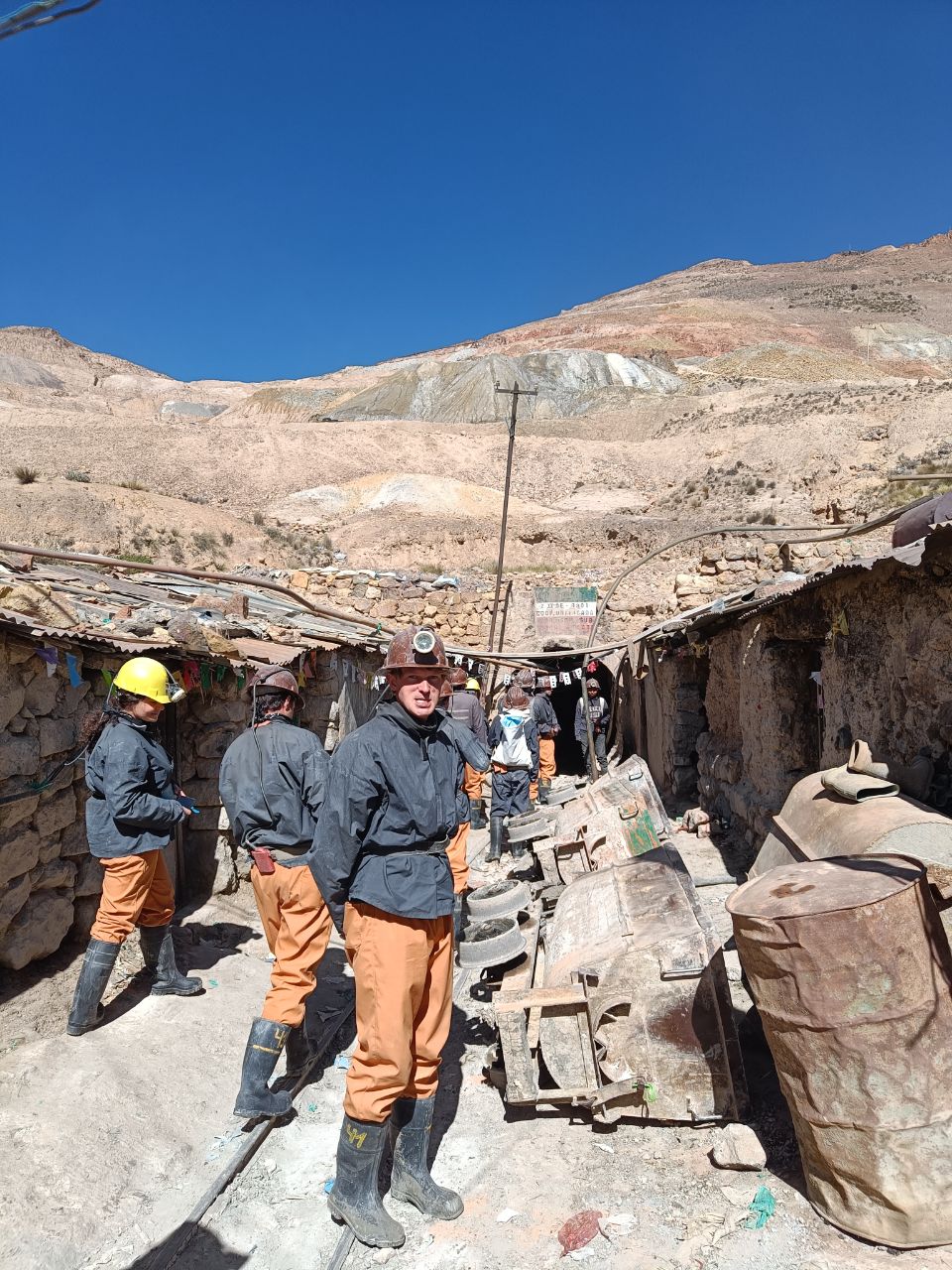
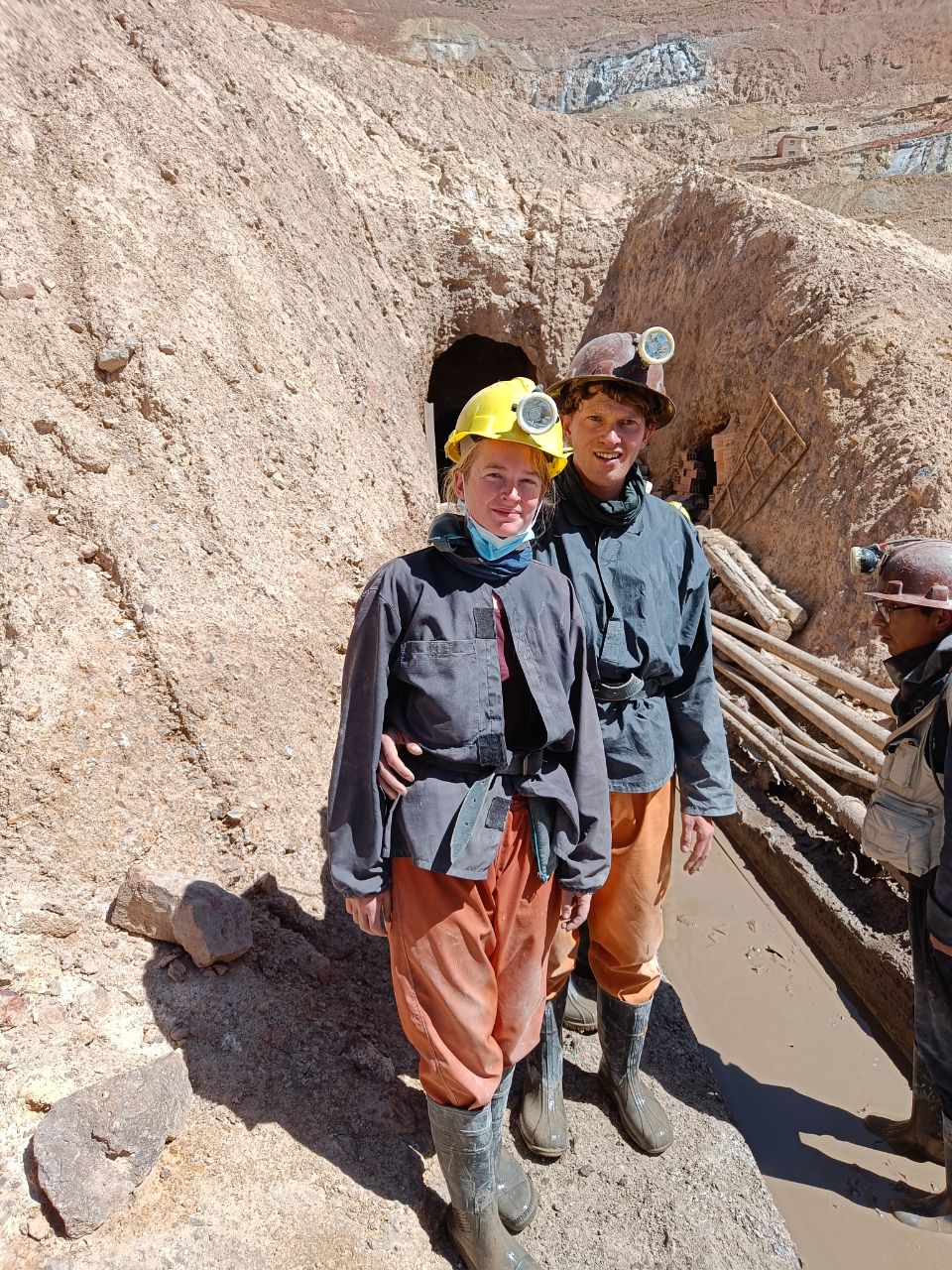
There we go. After changing to mining clothes and gear -because we did get dirty!- and a visit to the miners market to buy some gifts, we hopped into the cramped van that drove us some couple of 100 meters higher to the exit at 4300m! (Outside, the air is already thin, now imaging going inside...).
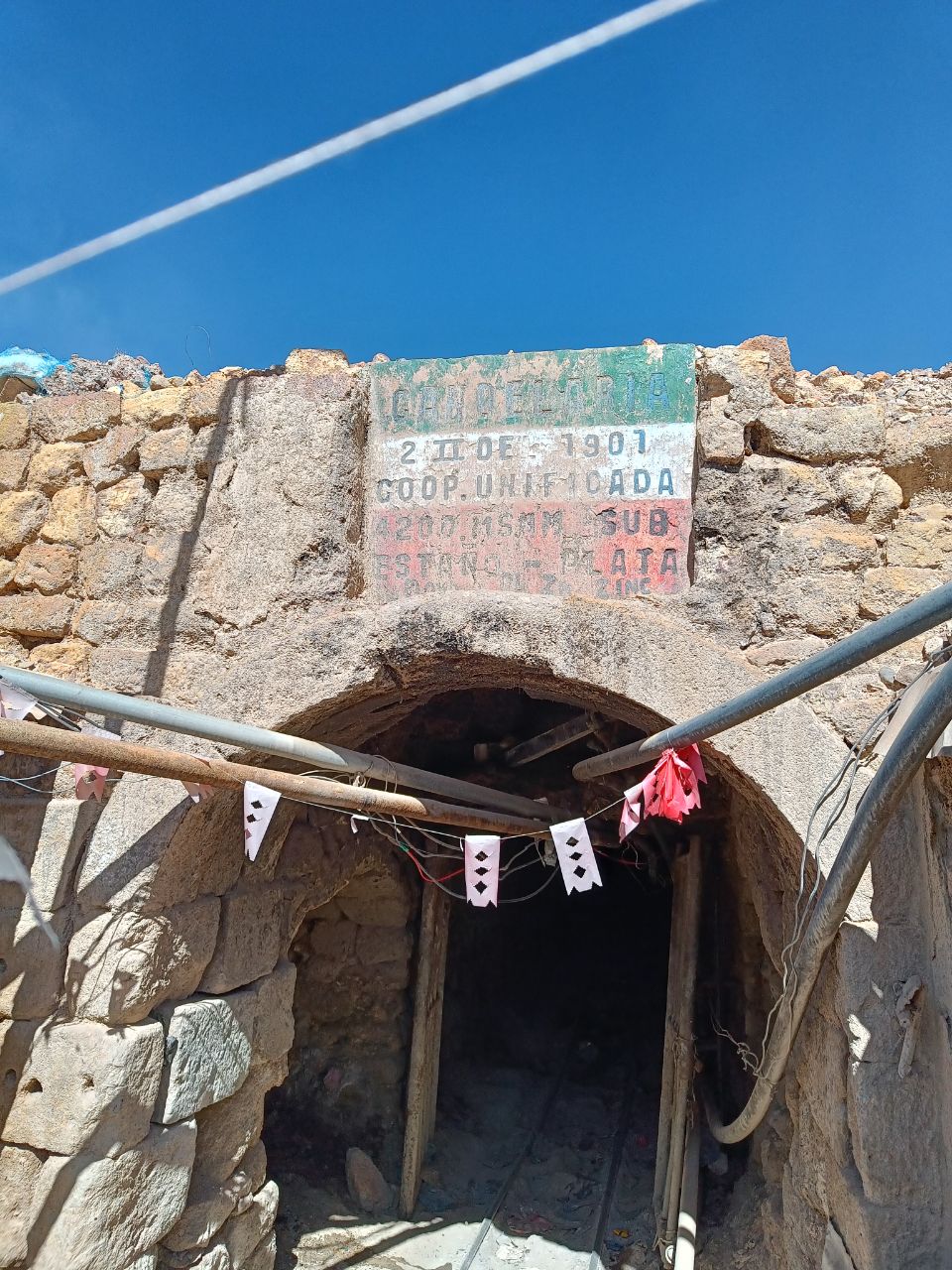
At the entrance was a holy shrine where usually, before the miners get to work, they asked for a blessing of Pachamama, their holy saint.
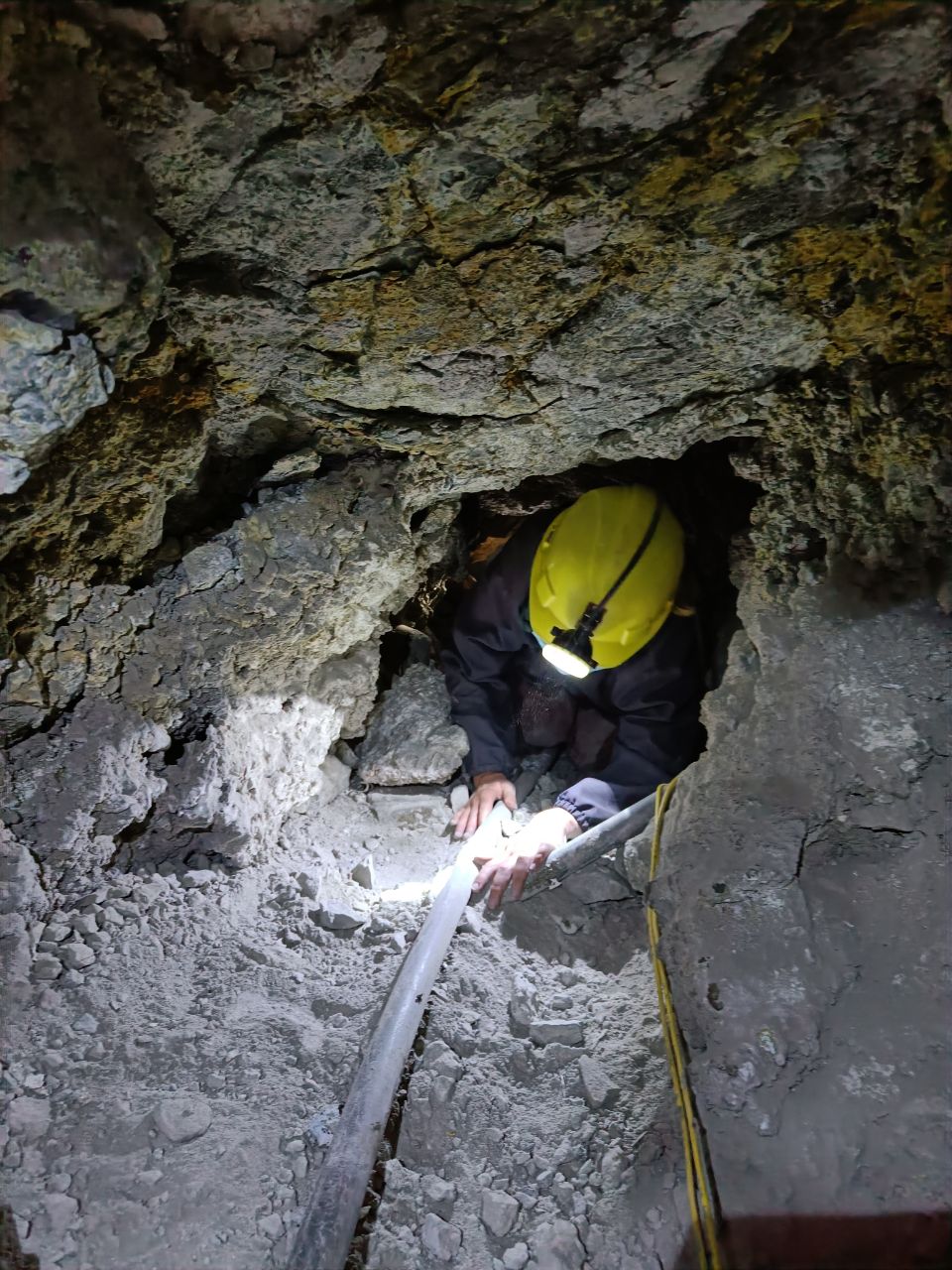
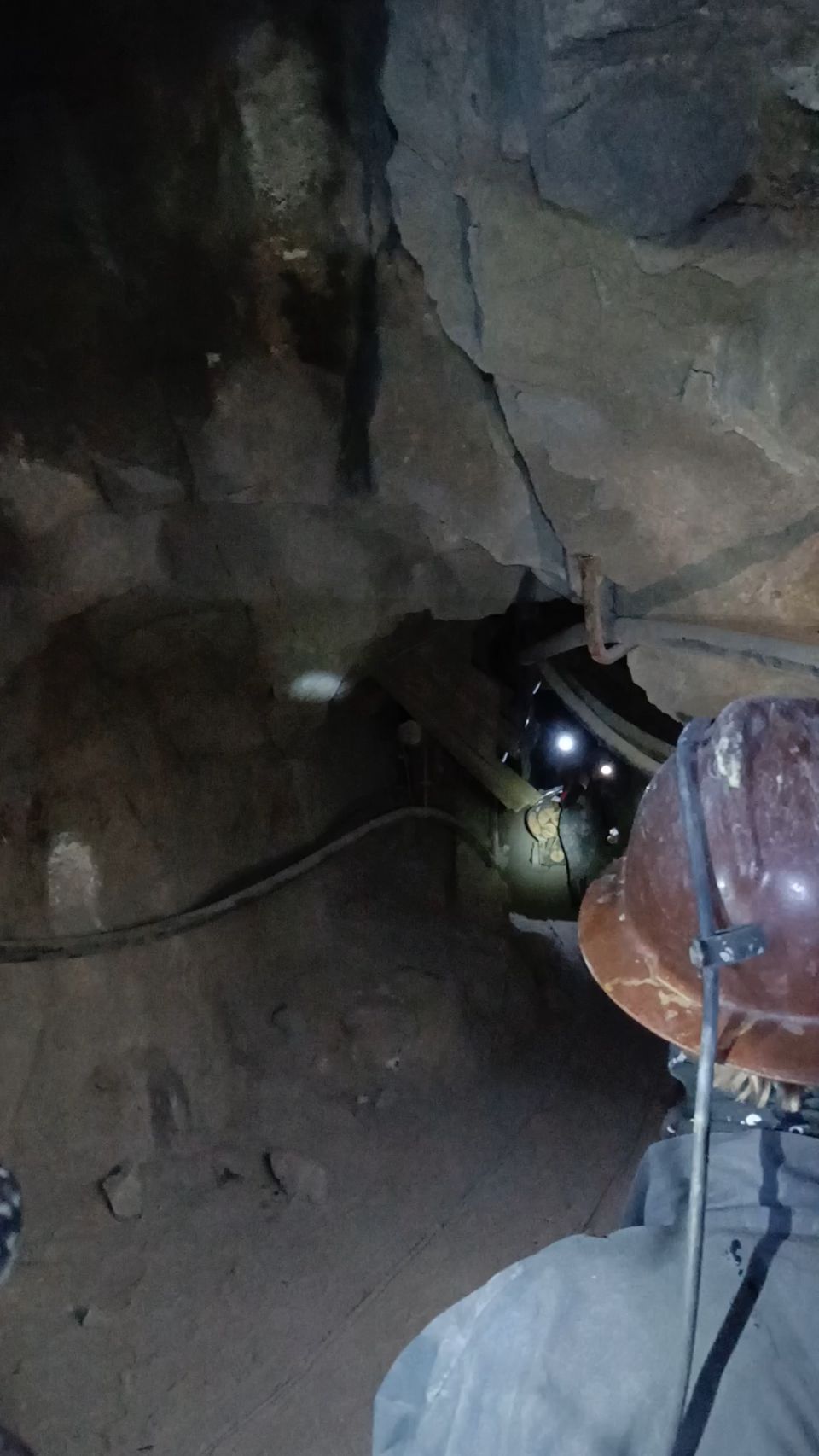
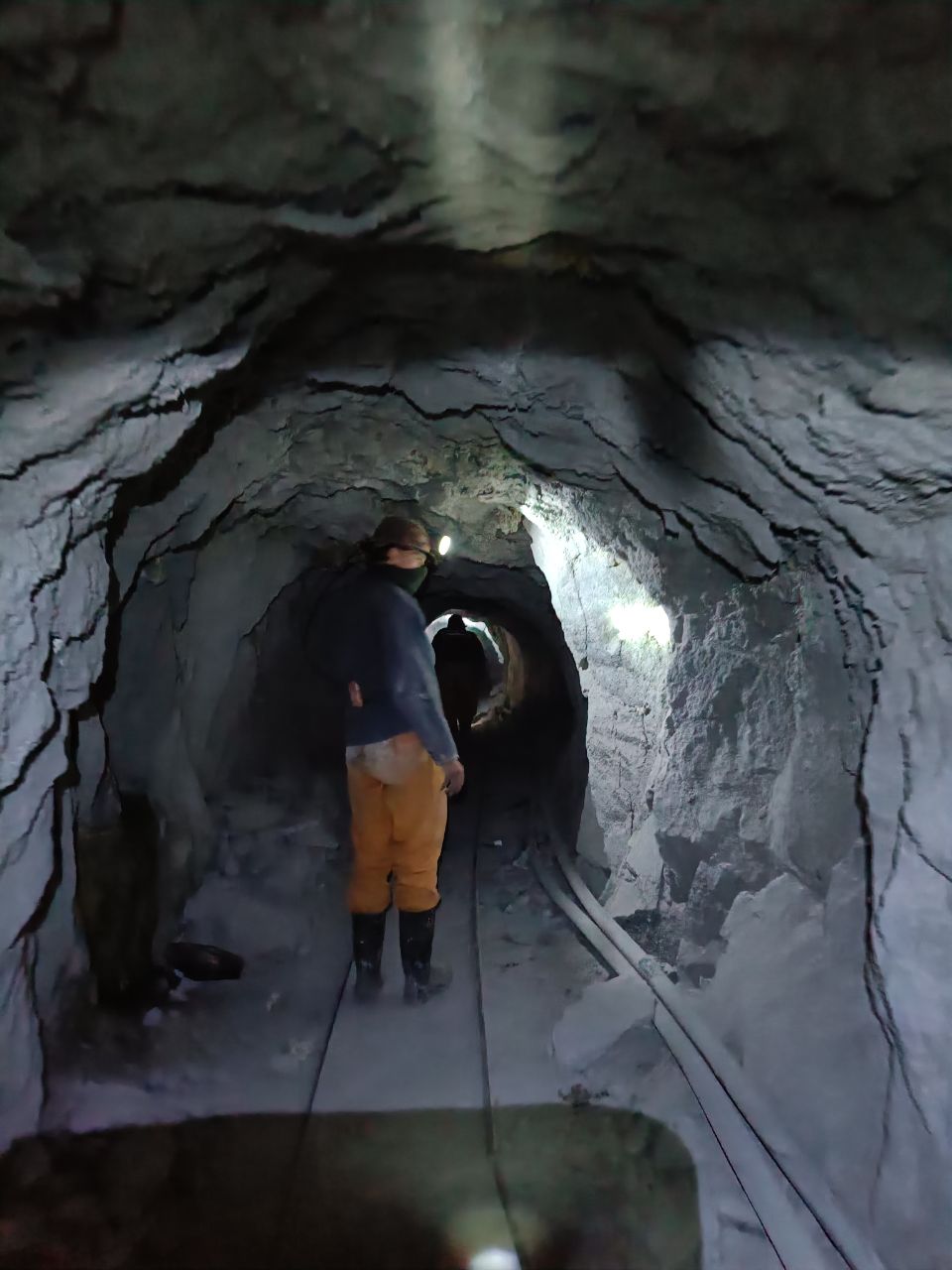
Now it was our time to step into the mine, although a bit anxious... After 10 minutes in the mine, we bumped into the hardest part: crawling for about 10 meters at a height of 60cm. This is what the miners have to do every day. Especially because of this exercise, it quickly turned super dusty. We were grateful for our masks, which at least filtered a bit of the dust (which can also contain asbestos!), but it definitely makes breathing not easier!! 😷 Fortunately, we only have to pass this small and claustrophobic section once, since we can use another exit (of a different mine). The miners are not allowed to take the other exit, it's what the tour agency described as 'the real miners experience'. ⛏️
The rest of the tour we could more or less keep on walking, except for some short crawling sections and ladders where falling rocks was more of a danger. 🪨⚠️
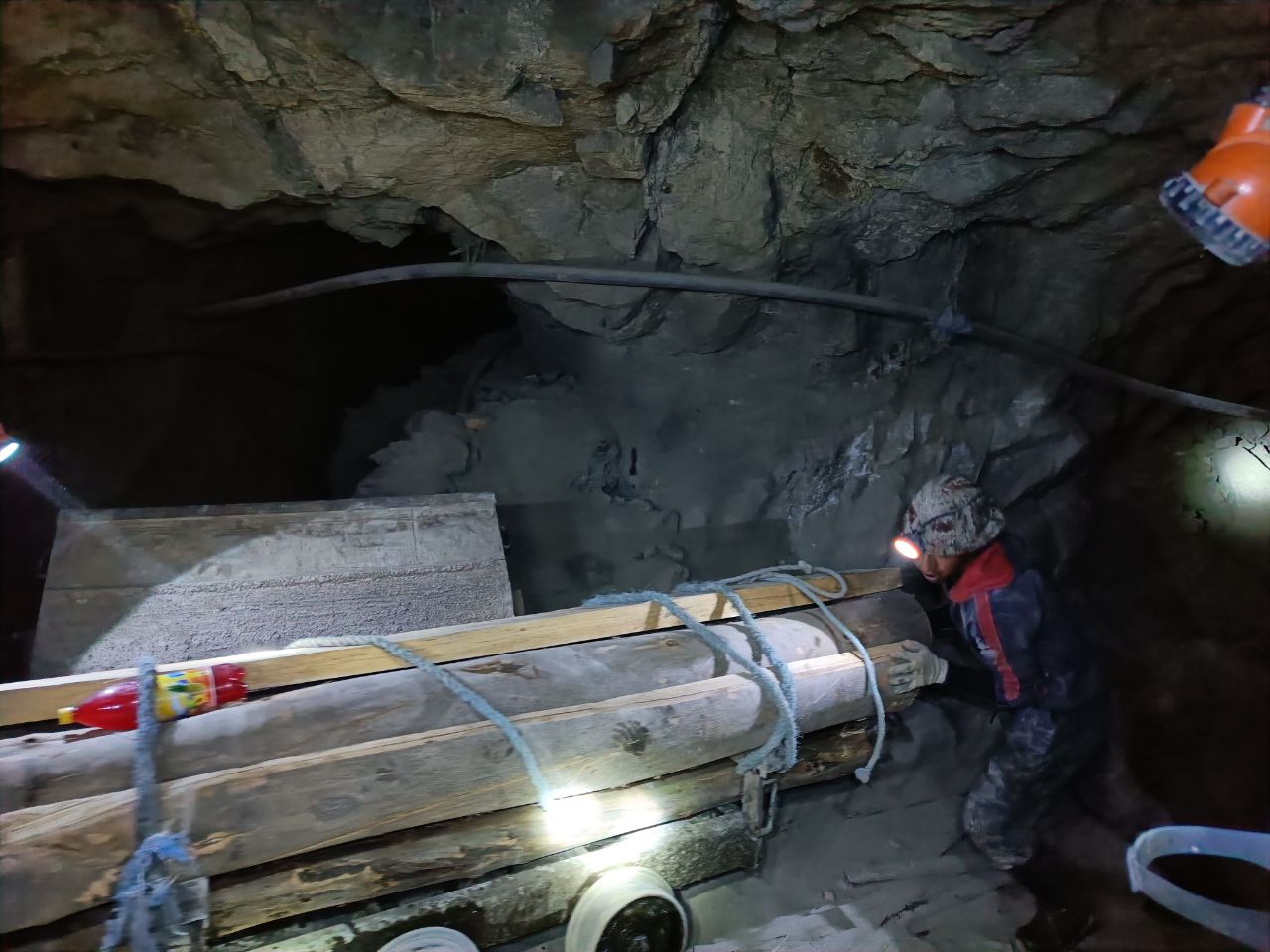
Going further, we were lucky when Liselot suddenly spotted a light. She asked the guide whether that was the other part of the group. However, the guide beckoned us to move out of the way quickly, because the over a ton loaded lorry won't stop. Because of being there on a Saturday, there was not many activity, so we were told that we were fortunate to encounter some miners. One of the miners told us that he was 18 years old and started this work at a shocking 13 years old. 😮
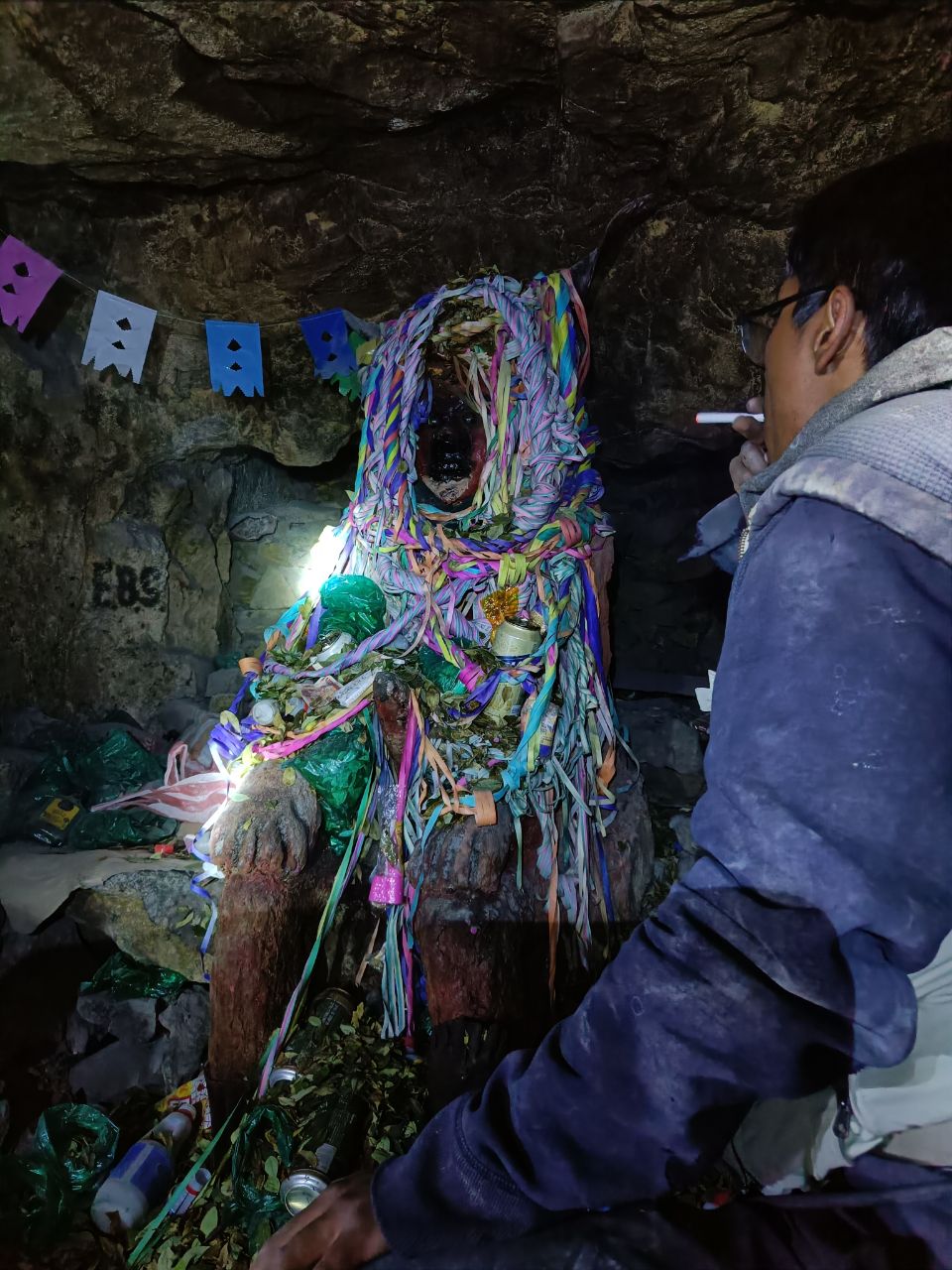
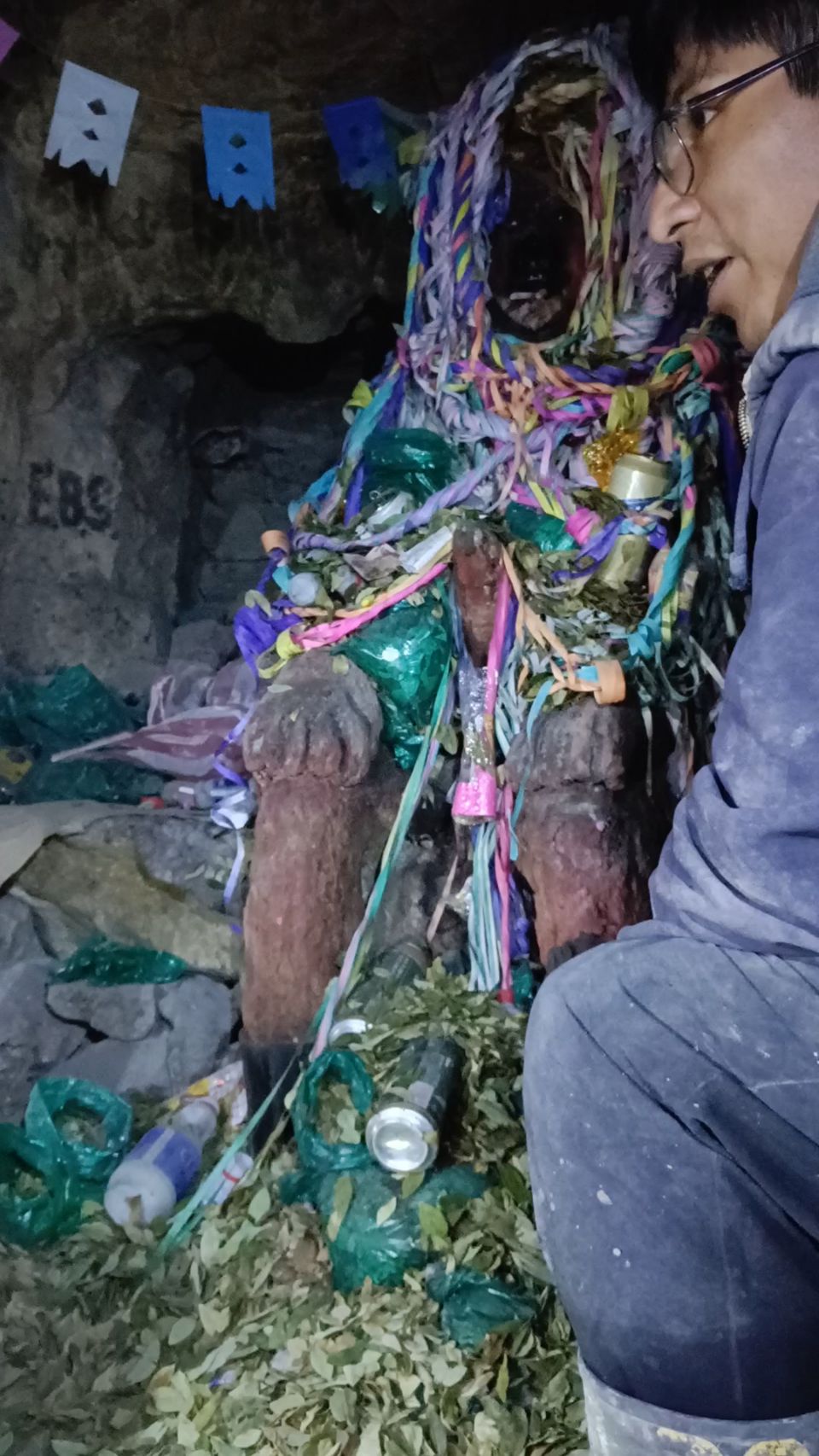
Deeper into the mines, we had a fascinating stop at a shrine of the miner's God: el Tío👹. The guides told us more about the rituals and beliefs the indigenous miners have. The shrine resembles the kind of the underworld and this is where the miners ask him for a safe return and prosperous life. Every Friday the miners perform a lengthy ritual offering cigarets, coca-leafs and alcohol.
Because the guide also lighted some cigarets to show us the ritual, the already thin and dusty air was filled with smoke. We were happy to move, although not so happy at the last mayor stop. Our guidebooks told us that putting on dynamite for tour groups is now strictly forbidden, because of the already unstable mine. Well, guess what these did... 🧨
Another 20 minutes in this horrific environment, where we encountered another trio of miners (always happy, because they believe being distressed in a place like this only brings misfortune), we finally walked out. There actually is light at the end of the tunnel!
▶️Pfoeh, end of the story... Whenever you are interested in some more images, we can recommend the german-made documentary: https://youtu.be/vU_dhh_VHpQ
We already knew to some extent about the horrible conditions under which so many of the resources we use daily are won. However, knowing and experiencing are not the same. Experiencing just a small part what is the normal working day of the miners truly gave us a new perspective on all the gadgets that we so frequently used without any afterthought.

Country Guides:
Bolivia